
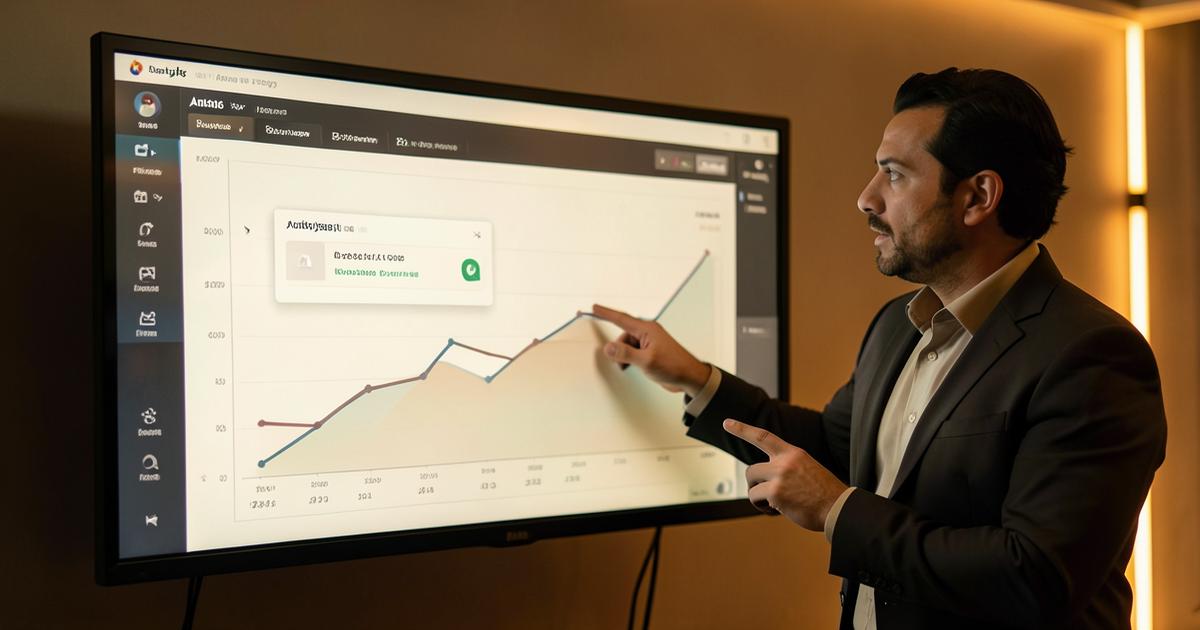
Marketing analytics reporting services should do more than show you what happened last month. They should help you spot a problem while there is still time to fix it, or catch an opportunity before it passes. Dashboards and scorecards are useful, but they are only part of the picture.
We see a common gap in growing marketing teams: plenty of data, not enough timely direction. Reporting summarizes results. Decision support watches for meaningful changes, tells the right person what needs attention, and gives that person enough context to respond with confidence.
Turn Reporting Into Faster Decisions
A monthly report may show that lead volume fell, but it cannot undo the budget spent while the decline went unnoticed. The same is true when conversion rates slip, calls slow down, or a campaign begins attracting lower-quality leads. By the time a scheduled review happens, the business impact may already be larger than it needed to be.
Disconnected platforms make the problem harder. Your team may need to compare advertising data, website activity, CRM records, call tracking, email performance, and customer reviews. When those details live in separate places, manual spreadsheet reviews take time and important signals can get lost.
Our approach at Digital Ingenuity combines AI automation with human strategy so your team can focus on the changes that matter. The goal is not an inbox full of alarms. It is a scalable system that brings the right issue forward, with a clear reason to act.
Why Static Dashboards Miss Important Changes
Dashboards are designed for visibility, not constant watchfulness. They answer useful questions when someone logs in and looks around. Yet paid media, search performance, website behavior, and lead flow can change quickly between weekly meetings.
Consider what can happen in a short period:
- Cost per lead rises after an audience becomes less responsive.
- A landing page change causes a drop in form completions.
- A high-value keyword loses visibility in search results.
- Calls increase, but lead follow-up slows and opportunities cool off.
Manual analysis can catch these issues, but it asks busy people to notice the right pattern across many systems at the right time. That is a tough job, especially when every channel has normal ups and downs.
Not every fluctuation deserves an alert. A small swing may be routine, while the same swing in a high-budget campaign could affect pipeline and revenue. Effective alerts separate background noise from a meaningful deviation tied to lead quality, customer acquisition, campaign efficiency, or sales readiness.
Build Alerts Around Business Outcomes
The best alert framework starts with decisions, not software. We recommend identifying the moments where a delayed response could waste budget, slow sales, or leave a customer concern unanswered. From there, you can choose the metrics that truly show whether performance is moving in the right direction.
Depending on your goals, those measures may include:
- Qualified leads, booked appointments, and pipeline value
- Customer acquisition cost, return on ad spend, and conversion rate
- Organic traffic, search visibility, and branded search activity
- Review ratings, response needs, and recurring customer concerns
- Customer retention and lifecycle engagement
Thresholds also need context. A change that looks dramatic in a small campaign may not matter much. On the other hand, a modest shift in a major channel can deserve immediate attention. We consider historical performance, seasonality, budget levels, campaign goals, and your sales team’s capacity before deciding what should trigger a notification.
Ownership is just as important as the threshold. An alert without a named owner often becomes another item everyone assumes somebody else will handle. A paid media manager may investigate a rising acquisition cost. A sales leader may need to review slow lead response times. Each alert should say who responds, what they should check first, and how quickly the issue needs attention.
Make Marketing Analytics Reporting Services Actionable
Marketing analytics reporting services become far more useful when reports and alerts work together. Reports provide the bigger story, including trends, results, and lessons. Alerts provide the operational layer between reviews, helping your team respond when something changes.
That requires a centralized source of truth. We bring together relevant signals from advertising platforms, website analytics, CRM records, call tracking, email systems, and reputation platforms. Seeing the full path from click to conversation to customer helps prevent narrow decisions based on one disconnected metric.
Context keeps an alert from becoming a mystery. For example, a lead-volume alert should show the affected channel, the date range, the normal baseline, recent campaign changes, landing page behavior, and downstream lead-quality signals. That gives the assigned person a starting point rather than a vague warning.
AI can monitor large sets of information and notice unusual patterns faster than a person reviewing tabs by hand. Human oversight still matters. Our strategists validate what the data is saying, weigh the business impact, and help determine the response that makes sense for your goals. Automation finds the signal. Strategy turns it into a smart decision.
Prepare Q4 Teams with Seasonal Alert Coverage
August is a practical time to review alert coverage before Q4 pressure arrives. Seasonal demand, holiday promotions, year-end budgets, and heavier advertising competition can all create faster shifts in performance. Waiting until the busiest period to discover a reporting gap puts your team in a reactive position.
Early alerts can show changes in branded search, product interest, website engagement, form submissions, call volume, and audience behavior. Those signals help teams prepare before demand reaches its peak. They also help protect budget efficiency when advertising costs and competitive pressure rise.
Sales and customer service need visibility too. When lead volume surges, your team needs to know whether response times are keeping up. When reviews require attention or conversational AI identifies repeating questions, the right people should be ready to respond. Marketing performance does not stop at the form fill or phone call.
Turn Every Signal Into a Next Step
Decision alerts do not replace strategic reporting. They make reporting more useful between scheduled reviews by turning important changes into timely, assigned actions. Start by identifying your highest-value decisions, the measures connected to those decisions, and the blind spots that currently slow your response.
A strong system blends integrated data, AI automation, and experienced human judgment. When each meaningful signal has context, an owner, and a response path, your team can spend less time hunting through reports and more time making clear, informed decisions.
Turn Reporting Into Faster Action
Digital Ingenuity helps teams build marketing analytics reporting services that connect performance data to timely, practical next steps. We can help you identify the alerts, workflows, and reporting structure that support your priorities. Contact us to discuss a clearer path from marketing signals to action.