Key takeaways
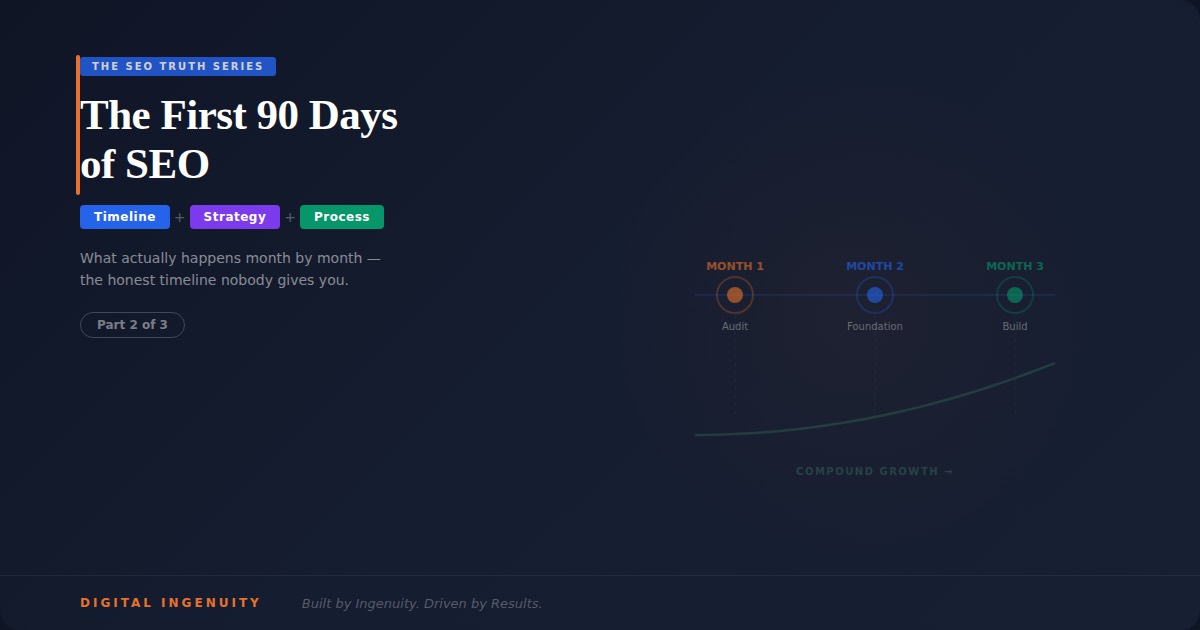
- Month 1 is all audit and strategy — if an agency starts “optimizing” on day one without understanding your baseline, that’s a red flag
- Month 2 is foundation work: technical fixes, content architecture, and the unsexy infrastructure that makes everything else possible
- Month 3 is when content and link building hit stride — and when you’ll start seeing early movement in Search Console data
- Meaningful ranking improvements typically begin appearing between months 3-6, with compounding returns after that
- The biggest mistake businesses make is judging SEO by month-2 results and quitting before the compound effect kicks in
The Honest Timeline Nobody Gives You
Every SEO agency on earth has been asked the same question: “How long until I see results?”
Most agencies dodge it. They say “it depends” or “every business is different” — which is technically true but practically useless. You’re investing real money every month and you deserve a realistic picture of what happens and when.
So here’s the truth, month by month, based on what actually happens during a properly executed SEO engagement. No hedging, no best-case fantasies.
Month 1: The Audit (Weeks 1-4)
The first month should feel like nothing is happening on your website. That’s a good sign.
A real SEO engagement starts with understanding where you are before deciding where to go. If an agency starts making changes to your site on day one, they’re applying a template — not building a strategy.
Week 1-2: Technical Audit
Every page on your site gets crawled and analyzed. We’re looking for the problems that are actively hurting your visibility — and most businesses have more than they realize. Broken internal links. Pages returning 404 errors. Duplicate content issues. Crawl budget being wasted on pages that shouldn’t be indexed. Slow load times. Missing structured data. Incorrect canonical tags.
This audit typically uncovers 20-50 issues on a small business site and 100+ on larger sites. Each one gets categorized by impact and effort, creating a prioritized fix list.
Week 2-3: Competitive Landscape Analysis
We identify who’s actually winning in your market — not who you think your competitors are, but who Google thinks they are. The businesses ranking for your target keywords might include national brands, local competitors, directory sites, and content publishers. Understanding who you’re competing against in search (which is different from who you compete against for customers) shapes every strategic decision.
Week 3-4: Keyword Strategy & Content Plan
This is where search volume data meets business intelligence. We map every relevant keyword cluster to search intent, funnel stage, and revenue potential. The output is a documented content strategy that answers: what content needs to exist, what order it should be created in, and what each piece needs to accomplish.
What you’ll see in Month 1: A comprehensive audit report, a competitive analysis, and a strategic roadmap. Your website won’t look different yet. Your rankings won’t have changed. And that’s exactly right.
Month 2: The Foundation (Weeks 5-8)
Month 2 is the least glamorous and most important phase. This is when the technical foundation gets built — the invisible infrastructure that determines whether all future content and optimization work actually translates into rankings.
Technical Fixes Deploy
The prioritized issues from the audit start getting resolved. Site speed improvements. Crawl errors fixed. XML sitemaps rebuilt. Robots.txt optimized. Schema markup implemented. Internal linking architecture restructured. Mobile rendering issues addressed.
None of this is visible to your customers. All of it is visible to search engines. And until these fundamentals are solid, adding content or building links is like putting premium fuel in a car with a broken engine.
Content Architecture Takes Shape
Your site’s content gets reorganized around topic clusters — groups of related pages that establish authority on specific subjects. Hub pages link to supporting content. Internal links create clear pathways for both users and crawlers. Pages that were competing with each other for the same keywords get consolidated or differentiated.
Initial Content Production Begins
The first strategic content pieces start getting created based on the keyword strategy from Month 1. These aren’t random blog posts — they’re carefully targeted pages designed to fill specific gaps in your topical coverage.
What you’ll see in Month 2: Your site will start changing. Pages load faster. New content appears. Your Search Console data might show increased crawl activity as Google re-evaluates your site. Rankings might fluctuate — sometimes down before they go up, as Google processes the structural changes. This is normal and expected.
Month 3: The Build (Weeks 9-12)
Month 3 is where the engagement hits full operational speed. The foundation is solid, the strategy is clear, and now it’s about consistent execution.
Content Production at Full Cadence
Strategic blog posts, landing pages, and supporting content are being published on a regular schedule. Each piece targets specific keyword clusters, answers specific questions, and links to other relevant content on your site. The topical authority engine is running.
Link Building Campaigns Launch
Manual outreach to relevant, authoritative websites begins. Digital PR opportunities get pursued. Guest content gets placed on industry publications. These links take time to acquire — a single high-quality link might require 20-30 outreach emails — but each one carries significant weight.
Local SEO Assets Optimized
If you’re a local business, your Google Business Profile is fully optimized and being actively managed. Posts are being published. Citations are being cleaned up across directories. Review strategy is being implemented.
What you’ll see in Month 3: This is where early signals start appearing. Search Console shows increased impressions — Google is showing your pages to more people, even if click-through rates haven’t spiked yet. Some long-tail keywords start moving onto page one. Your site’s overall crawl health improves. Individual pages start earning positions they didn’t have before.
What Happens After 90 Days
The first 90 days build the machine. Months 4-6 are when the machine starts producing.
Between months 3 and 6, you’ll typically see meaningful ranking improvements for your target keywords. Pages that were on page 3 move to page 2. Pages on page 2 break onto page 1. Featured snippet opportunities start appearing. Organic traffic begins a sustained upward trend.
After month 6, the compound effect kicks in. New content publishes to a site that already has authority. Links point to a domain that Google already trusts. Each new optimization builds on the foundation of everything that came before. This is where the ROI curve bends sharply upward.
The Mistakes That Kill SEO Before It Works
Quitting at month 3. The most common and most expensive mistake. You’ve paid for the foundation — the audit, the technical fixes, the strategy — and stopped right before the returns start materializing. That investment is gone.
Judging by rankings alone. Rankings are a lagging indicator. Impressions increase before rankings improve. Rankings improve before traffic increases. Traffic increases before conversions increase. If you’re only watching position tracking, you’ll miss the leading indicators that tell you the strategy is working.
Making major site changes mid-engagement. Redesigning your website, switching CMS platforms, or restructuring your URL architecture during an active SEO engagement is like renovating the kitchen while the contractor is fixing the foundation. Everything needs to be re-audited and re-optimized.
Comparing to paid ads timelines. Google Ads delivers traffic the day you turn it on. SEO doesn’t work that way. But Google Ads stops delivering the day you turn it off. SEO compounds. After 12 months, you’re getting traffic from content published in month 3 that still ranks — and you’re not paying per click for it.
The 90-Day Gut Check
At the end of 90 days, you should be able to answer “yes” to all of these:
Do I have a documented strategy I understand? Do I know what keywords we’re targeting and why? Can I see the technical improvements that were made? Is new content being published on a strategic schedule? Am I seeing increased impressions in Search Console? Is my agency explaining what’s happening and why in terms I understand?
If the answer to any of these is “no” at day 90, you have the wrong agency — regardless of price.
Series Navigation
← Previous: What a $999/mo SEO Agency Actually Does (vs. a $299 One)
Next →: How to Read an SEO Report Without Your Eyes Glazing Over
The full SEO picture: Explore our SEO pillar →
Digital Ingenuity is a premium search optimization agency based in Plano, Texas. No contracts. No fluff. Book a discovery call →