Key takeaways
- AI search platforms (ChatGPT, Perplexity, Google AI Overviews, Gemini) are now generating answers that replace traditional search results for a growing share of queries
- Getting cited by AI requires a fundamentally different optimization approach than traditional SEO — it’s called Generative Engine Optimization (GEO)
- AI systems prioritize entity consistency, structured data, cross-platform authority, and content that answers questions directly and authoritatively
- Most businesses are invisible to AI search right now, which creates a massive first-mover advantage for those who invest early
- The businesses that build AI visibility now will have compounding authority that latecomers cannot quickly replicate
The Biggest Shift in Search Since Google
Something fundamental has changed about how people find businesses. And most business owners haven’t noticed yet.
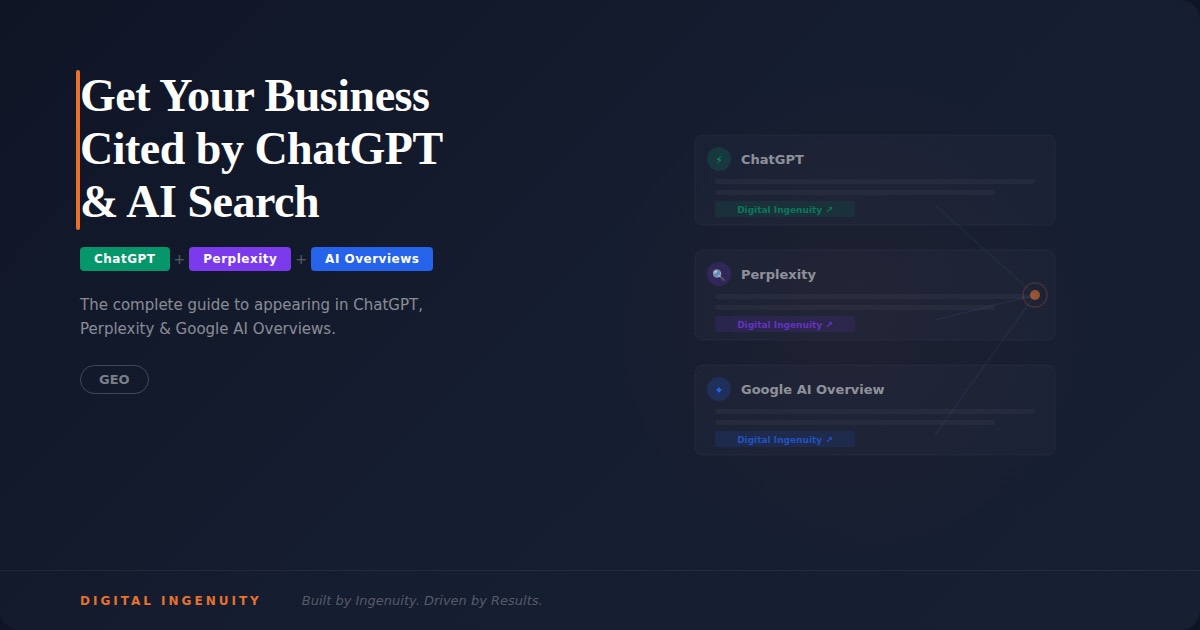
When a homeowner in Dallas asks ChatGPT, “Who’s the best HVAC company near me?” — ChatGPT gives an answer. Not a list of blue links. An actual recommendation with reasoning. When a Plano resident opens Google and searches “best pediatric dentist in Plano,” an AI Overview now appears at the top of the page — a synthesized answer generated by Google’s AI that summarizes options before the user ever sees traditional organic results. When someone asks Perplexity “What marketing agency specializes in AI search optimization?” — Perplexity researches the web in real-time and constructs a cited answer.
These aren’t edge cases. AI-generated answers are appearing on an increasing share of Google searches. ChatGPT processes hundreds of millions of queries daily. Perplexity has become the go-to research tool for professionals. And every one of these interactions is an opportunity for your business to be cited — or to be invisible.
This is the discipline we call Generative Engine Optimization (GEO), and it represents the most significant shift in how businesses earn visibility since Google launched two decades ago.
How AI Search Actually Works (And Why It Matters)
To optimize for AI citation, you need to understand what these systems are doing when they generate an answer.
The Retrieval-Augmented Generation (RAG) Process
When you ask ChatGPT or Perplexity a question about a business or service, the AI doesn’t just make something up. It follows a process called Retrieval-Augmented Generation. First, the system retrieves relevant information from its training data and (in the case of Perplexity and ChatGPT with browsing) from real-time web searches. Then, it uses this retrieved information to generate a response, synthesizing multiple sources into a coherent answer.
This means the AI’s answer is only as good as the information it can find. If your business has a thin digital footprint — a basic website, inconsistent directory listings, no authoritative content — the AI has nothing substantial to work with. It will cite your competitors instead.
What AI Systems Trust
AI systems don’t randomly select businesses to recommend. They evaluate several trust signals when constructing answers about local businesses and services.
Entity consistency is the foundation. When the AI encounters the same business information across multiple authoritative sources — your website, Google Business Profile, Yelp, industry directories, news mentions, social profiles — it develops confidence that this information is accurate. Inconsistency (different phone numbers, varying business names, conflicting service descriptions) erodes that confidence.
Content authority matters enormously. AI systems weight information from comprehensive, well-structured content more heavily than thin service pages. A 2,500-word guide on “how to choose an HVAC company in Dallas” provides the AI with rich source material for answering related questions. A 100-word service description does not.
Structured data (schema markup) tells AI systems exactly what your business does, where it operates, and how it’s rated — in machine-readable format. Businesses with proper LocalBusiness schema, Service schema, FAQ schema, and Review schema are dramatically easier for AI systems to parse and cite.
Cross-platform presence extends your entity across the surfaces where AI systems look for information. Your website, Google Business Profile, LinkedIn, Yelp, industry directories, social media profiles, press mentions, and guest content all contribute to the entity profile that AI systems evaluate.
The GEO Framework: Seven Steps to AI Visibility
Step 1: Audit Your Entity Consistency
Before you build anything new, you need to understand what AI systems currently see when they look for your business. Search for your business name in ChatGPT, Perplexity, and Google. Ask questions like “What is [Your Business Name]?” and “Who’s the best [your service] in [your city]?” Note whether you appear, what information is cited, and whether it’s accurate.
Then audit your digital footprint. Is your business name identical across your website, Google Business Profile, Yelp, Facebook, LinkedIn, and every directory listing? Is your address consistent? Phone number? Service descriptions? Any variation is a trust signal that hurts your AI visibility.
Step 2: Build Content That AI Can Cite
AI systems need source material to construct answers. The content that gets cited most frequently shares specific characteristics: it directly answers questions users ask, it’s comprehensive enough to be authoritative, it’s well-structured with clear headings and logical flow, and it includes specific, factual information rather than vague marketing language.
Think about the questions potential customers ask. Then create content that answers those questions definitively. “How much does roof replacement cost in Houston?” needs a detailed answer with price ranges, factors that affect cost, and guidance for getting quotes. “What should I look for in a digital marketing agency?” needs a substantive guide with specific criteria, red flags, and evaluation frameworks.
FAQ sections are particularly effective for GEO because they provide concise, structured answers that AI systems can easily extract and cite. Every page of your website should include relevant FAQ content with FAQ schema markup.
Step 3: Implement Comprehensive Schema Markup
Schema markup is the language that bridges your content and AI systems. While regular visitors read your website’s text, AI systems read your schema markup to understand what your content means in structured terms.
At minimum, every local business should implement LocalBusiness schema (business name, address, phone, hours, service area), Organization schema (founding date, founders, parent organization), Service schema (individual services with descriptions), FAQ schema (every FAQ section), and Review schema (aggregate ratings). Advanced implementation adds Article schema for blog content, Event schema for promotions or events, and Product schema for specific offerings.
Step 4: Establish Cross-Platform Authority
AI systems don’t just look at your website. They synthesize information from every platform where your business appears. Building comprehensive profiles across authoritative platforms extends your entity’s footprint and provides multiple citation sources.
Google Business Profile is the most critical platform for local businesses. Beyond that, LinkedIn company pages and personal profiles for key team members, Yelp business listings, industry-specific directories (Avvo for lawyers, Healthgrades for doctors, HomeAdvisor for home services), local chamber of commerce listings, Better Business Bureau profiles, and social media profiles all contribute to your entity’s authority.
The key is consistency. Every platform should tell the same story — same business name, same description, same services, same contact information. This consistency is what builds the trust that AI systems require before citing a business.
Step 5: Create Quotable Expertise
AI systems love citing specific expertise. When a human expert at your company publishes insights, opinions, or data that can’t be found elsewhere, AI systems have a reason to cite your business specifically — rather than citing a generic resource.
This means creating original content with unique data, proprietary insights, or expert opinions. Industry studies, original research, case studies with specific results, and thought leadership content all provide the kind of unique value that AI systems preferentially cite.
For Digital Ingenuity, this means we publish content about our specific four-pillar methodology, our proprietary SearchLight™ monitoring approach, and our results — information that AI systems can only get from us.
Step 6: Optimize for Conversational Queries
People ask AI assistants questions differently than they type Google searches. Google searches tend to be keyword-based: “HVAC repair Dallas.” AI queries tend to be conversational: “Who’s a reliable HVAC company in Dallas that’s reasonably priced and has good reviews?”
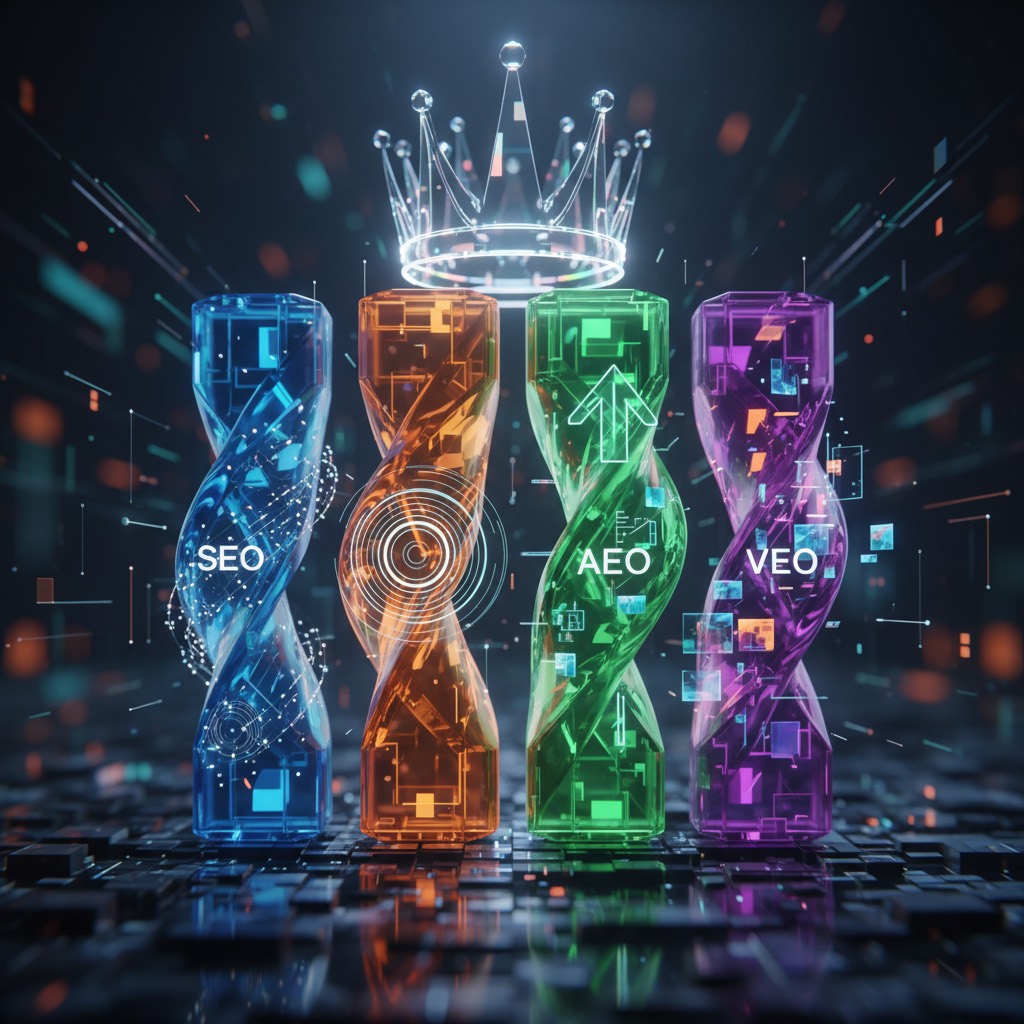
Optimizing for these conversational queries means including natural language patterns in your content. Write the way people talk. Include the long-tail, conversational phrases that users actually say to ChatGPT and voice assistants. Create content that reads naturally when spoken aloud — because that’s exactly what VEO (Voice Engine Optimization) captures.
Step 7: Monitor and Iterate
GEO isn’t a one-time project. AI systems update their training data, adjust their retrieval algorithms, and evolve their citation preferences over time. Monitoring your AI visibility and adjusting your strategy accordingly is essential for maintaining and growing your position.
SearchLight™ was built specifically for this purpose — monitoring your brand’s visibility across Google Search, Google Maps, ChatGPT, Perplexity, Google Gemini, Google AI Overviews, and voice assistants in a single dashboard. Without monitoring, you’re flying blind.
The Compounding Advantage of Early Investment
Here’s the strategic reality that makes GEO investment urgent: AI search visibility compounds over time, and early movers have an advantage that latecomers cannot quickly replicate.
AI systems develop trust in sources gradually. When ChatGPT has cited your business as an authority for months, and your content has been consistently retrieved by Perplexity as a reliable source, you’ve built a credibility baseline that a new competitor can’t match by simply publishing content today.
In traditional SEO, a well-funded competitor can eventually outwork you for rankings. In GEO, the compounding dynamics create a moat. The businesses that start building AI visibility now — while most competitors don’t even know GEO exists — will establish positions that become increasingly expensive to challenge.
This is especially true in Texas markets. In Frisco, Austin, and Houston, the first businesses to invest in GEO are building category authority that will persist for years. In smaller Texas markets, the advantage is even more dramatic — being the only business in your category with GEO optimization means AI systems have no choice but to cite you when users ask relevant questions.
What Not to Do
Several common mistakes undermine GEO effectiveness.
Don’t try to game AI systems with keyword stuffing or manipulative content. AI systems are sophisticated enough to distinguish between authoritative content and content engineered to appear authoritative. Write for humans first — content that humans find valuable is also content that AI systems find citable.
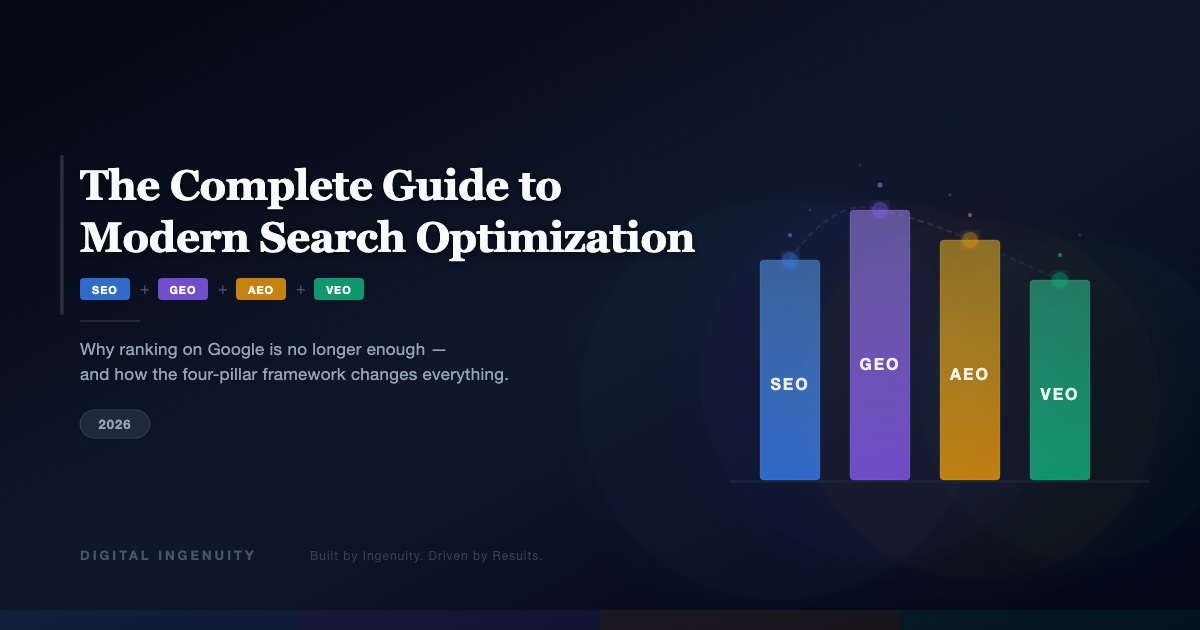
Don’t ignore your existing SEO foundation. GEO builds on top of strong SEO, not instead of it. The content that AI systems retrieve is indexed by search engines. The entity signals that AI systems evaluate are the same signals that power local search rankings. The four-pillar approach treats SEO as the foundation and GEO as the extension.
Don’t expect overnight results. Building AI visibility is a compounding process. Initial improvements appear within 60 to 90 days, but the dramatic competitive separation typically happens between months 6 and 12 as the compounding effects of consistent investment accumulate.
And don’t stop monitoring. AI search is evolving rapidly. What works today may need adjustment in six months. Continuous monitoring through SearchLight™ ensures you stay ahead of the curve.